What Do Marine Accords Smell Like? 

A sensory journey through Saltchuck and Amberchuck

Close your eyes for a moment.


Imagine the first breath you take when you step onto a quiet coastline. The air is cool against sun-warmed skin. Salt hangs lightly in the breeze. Waves break somewhere in the distance, and the wind carries traces of citrus peel, driftwood, and water that has touched stone for centuries.


That feeling is what perfumers call a marine accord.


It is not simply the smell of “the ocean.” It is the atmosphere around it.

The scent of a memory

Summer memories are often stored in scent before they are stored in words: the sweet melt of a fruit popsicle, sunscreen on warm shoulders, the sparkle of sunlight on moving water, bare feet sinking into sand after a swim.


Marine fragrances speak directly to those memories. They recreate the sensation of openness, salt air, and clean water rather than the literal smell of seawater. This is why ocean-inspired perfumes feel instantly familiar, even when we cannot explain why.


Research into our relationship with water suggests that being near oceans, rivers, lakes, or even fountains can calm the mind and evoke feelings of wellbeing. Marine biologist Wallace J. Nichols describes this connection as a “blue mind” state—a mental shift that occurs when we see, hear, or smell water. A marine fragrance can act as a small doorway back to that feeling.

hi

WHAT DOES MARINE ACCORD ACTUALLY SMELL LIKE?

THE BLUE STUFF

Many marine fragrances are paired with citrus, green, floral, or woody notes to create freshness without smelling sharp or soapy.
EXPLORE AMBERCHUCK

The scent of a memory

People often expect a marine perfume to smell salty, but the experience is more nuanced. A marine accord can smell:

  • like cool sea breeze on skin
  • like clean water splashing against rocks
  • like air after a coastal storm
  • like sunlit citrus carried by ocean wind
  • like driftwood drying in the sun
  • like mineral-rich coastal air

The molecule that changed modern perfumery

The modern marine fragrance movement began in the late twentieth century with the discovery of a synthetic molecule called calone. Introduced into perfumery in the 1990s, calone brought a new kind of freshness: airy, watery, slightly green, with hints that can feel reminiscent of melon, watermelon, or cool ocean air.


Its arrival transformed perfumery. Fresh scents were no longer only citrus-based; they could feel transparent, aquatic, and expansive. Marine fragrances quickly became symbols of escape, freedom, and a renewed connection to nature.

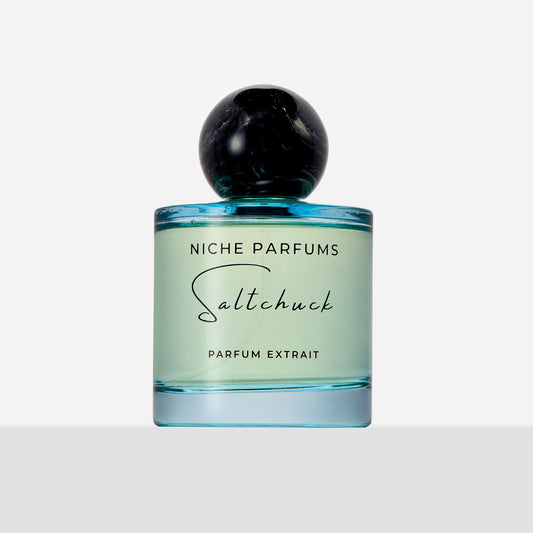
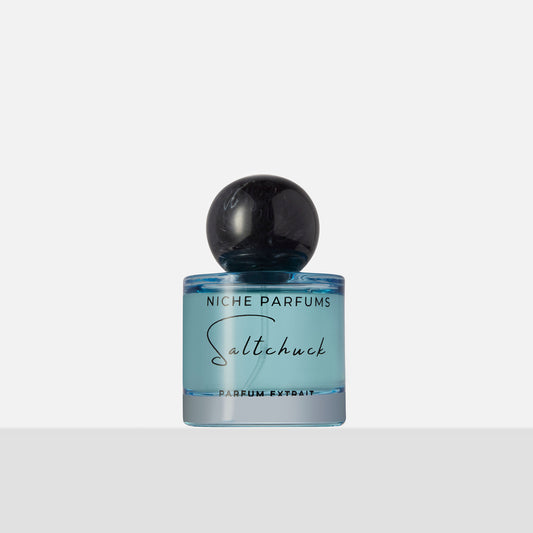
Saltchuck: the coastline at sunrise

40

Amberchuck: the coastline at golden hour

41

Why marine fragrances feel different in summer

As temperatures rise, heavy scents can feel dense on the skin. Marine accords expand beautifully in warm weather, creating a sense of movement and freshness. Citrus becomes brighter, salty notes become more radiant, and the fragrance feels as though it is breathing with the air around you.

This is why ocean-inspired perfumes return every summer—not as a trend, but as a seasonal instinct.

Wear the feeling, not just the fragrance

The beauty of a marine accord is that it wears like an experience.

  • Saltchuck is the first dive into cool water.
  • Amberchuck is the final walk along the shore as the sky turns gold.


Together they tell the story of the same coastline at two different moments of the day.

So when someone asks, “What do marine accords smell like?” the answer is not simply salt or ocean.


They smell like a breeze that clears the mind, sunlight on water, and the kind of summer memory that stays with you long after the season has ended.

Explore The Collection